
 UK Trader
A robot in South Carolina spent ten months putting bits of metal in the right place. BMW says it moved over 90,000 of them. I’d quite like to see the invoice.
I can see the appeal of a machine that’ll do the laundry, although I’d settle for one that can get the duvet back in its cover. The bit that interests me as an investor is what happens when a perfectly ordinary business can buy one and put it to work.
I’ve always thought AI models would become commodities. One model can be miles better than another and still lose my business once a cheaper one does the job well enough. If I’m paying a robot to load a welding jig, how much extra am I going to pay for a cleverer model once the first one puts the part in the right place every time?
The robot had one job
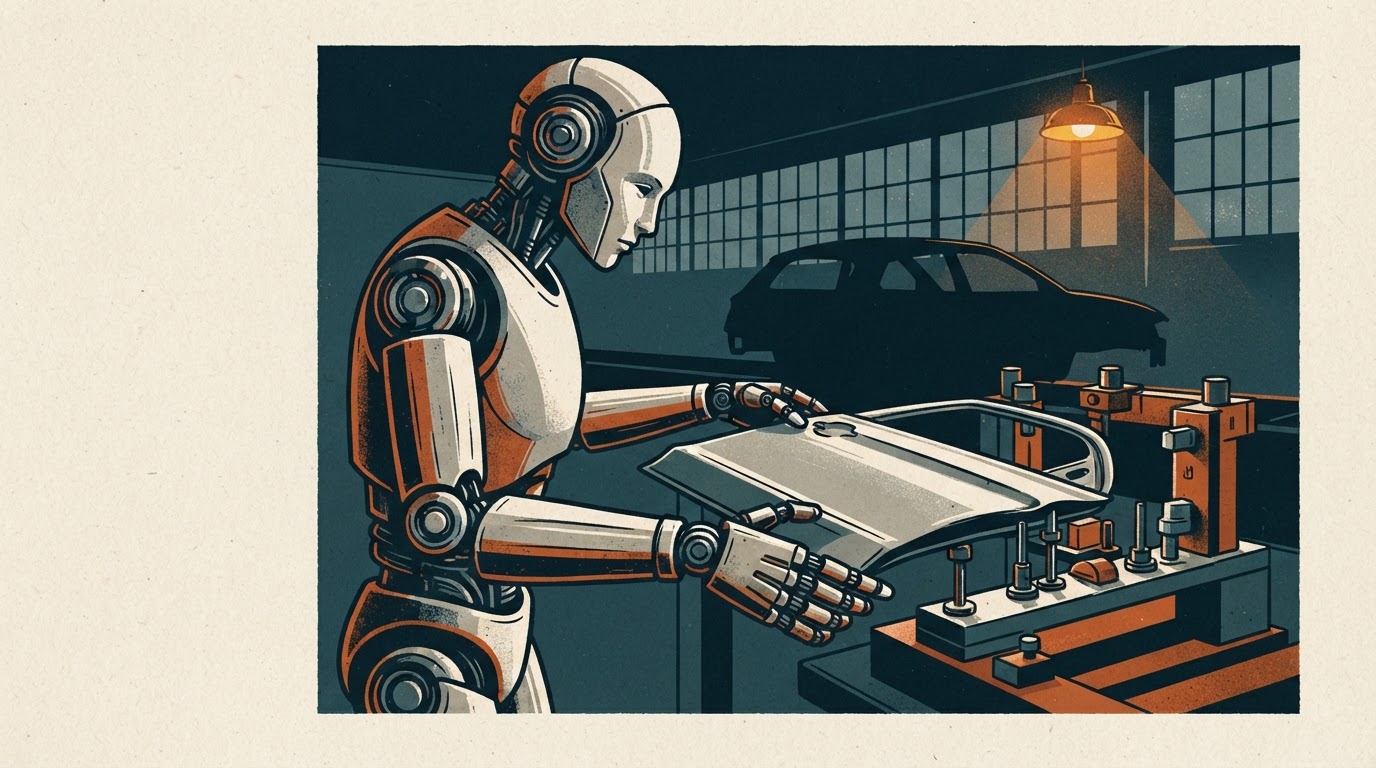
At BMW’s Spartanburg plant, Figure 02 picked up pressed metal parts and positioned them for welding. Conventional industrial robots did the welding. That division of labour makes sense to me. Why replace a perfectly good welder when the awkward bit is getting the next piece into its jig?
BMW clocked around 1,250 operating hours during the pilot. The number I’d love to put alongside that is the cost per correctly loaded part, including the time somebody spent getting the line going again when it stopped. That’s the figure a factory manager could take to the board to get a second machine signed off.
Google DeepMind already has a model designed to run on the robot itself. A factory could still pay a licence fee, of course. And if changing model means stopping the line and repeating every safety test, I might be underestimating how long the original supplier can keep charging. But running locally does loosen the link between a robot doing another shift and a cloud provider selling another shift’s worth of computing time.
A UK share that made me think twice
Renishaw (LSE: RSW) looks like the sort of UK industrial I’d start with. Its associate RLS makes encoders, the little devices that tell a machine where a moving part actually is. PAL Robotics used them in a humanoid’s knees, wrists and elbows. Even a very clever robot has a fairly basic problem if it thinks its knee is somewhere else. Renishaw has a good illustration of how these work.
Then I read Renishaw’s February results call. An analyst asked chief executive Will Lee about humanoids. He reckoned buyers would want the encoders at a price that held little appeal for Renishaw. The company had better opportunities elsewhere. Fair point. I’d started out wondering whether the model suppliers could hold their prices and nearly forgotten to ask the same question about the people selling the knees.
So where might the money go? Suppose a UK manufacturer can use a robot to keep a second shift running and take on orders it used to turn away. If customers have few other places to get that part, some of the saving could stay in its margins. If six rival factories can buy the same machine, I’d expect the customer to have a decent go at pocketing the saving at the next tender. Same robot, very different result for shareholders.
That’s why I think the list of shares that do well out of robotics could look quite different from today’s AI favourites. I’ll be looking through industrial companies’ results for the customer who ordered a second machine at the going rate. If they say what the first one earned them, all the better. That would get a ticker into my research notebook faster than another video of a robot folding a towel.
